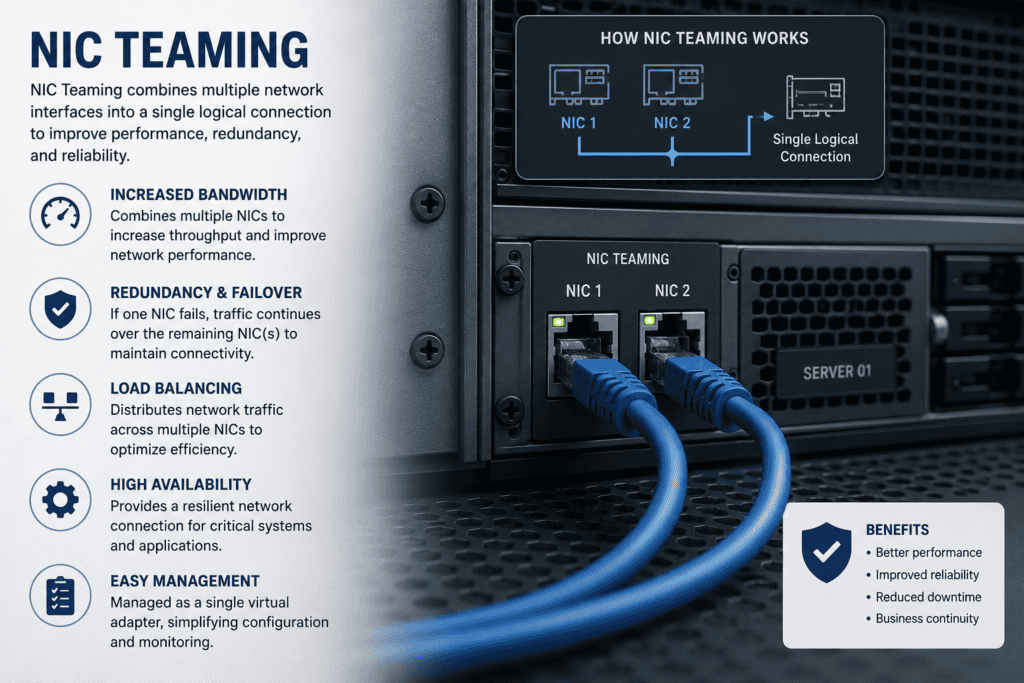
A NIC, or Network Interface Card, is the piece of hardware that allows a computer or server to connect to a network. You can think of it as the voice that lets a computer talk to other computers. NIC Teaming means using two or more network cards together so they act like one stronger and more reliable connection. It is similar to having two roads instead of one. If one road is blocked, traffic can still move on the other.
NIC teaming improves reliability and performance. If one network card fails, another card automatically takes over. This is called Failover. Some NIC teaming configurations also share network traffic between cards, which increases speed and reduces congestion. This is known as Load Balancing. Both features help systems stay online when hardware problems occur.
From a cybersecurity perspective, NIC teaming supports High Availability. Security systems such as authentication servers, monitoring tools, and logging servers must stay online to protect the network. If a server loses its network connection, users cannot log in and security controls may stop working. NIC teaming reduces the risk of downtime caused by hardware failure.
On the Security+ exam, NIC teaming appears in questions about redundancy, fault tolerance, and preventing single points of failure. It is commonly used on critical servers where downtime could cause serious business or security problems.
Related keywords
- Redundancy
- High Availability
- Failover
- Fault Tolerance
- Load Balancing